
Category: Public Records

  • OPD’s reports list 5 sustained citizen-complaint dispositions in 2025 and two different counts for 2024

    OPD’s reports list 5 sustained citizen-complaint dispositions in 2025 and two different counts for 2024

    By Oversight Justice Staff | Nov. 12, 2026 | Updated Nov. 13, 2026

    The Omaha Police Department’s year-end reports list 5 sustained citizen-complaint dispositions in 2025. For 2024, two OPD reports give different counts, and neither says what a single disposition counts.

    Disclosure: Oversight Justice is owned by David Mitchell, who founded the site and also owns Gamers Hub LLC, which operates as Go Gamers. Mitchell sued Douglas County, the City of Omaha, Douglas County Attorney Don Kleine and others in federal court (Mitchell v. County of Douglas, No. 8:23-cv-00332, D. Neb.). The court dismissed the suit on April 12, 2024, on several grounds, including immunity and failure to state a claim; the 8th U.S. Circuit Court of Appeals affirmed on Feb. 5, 2025. See our About page.
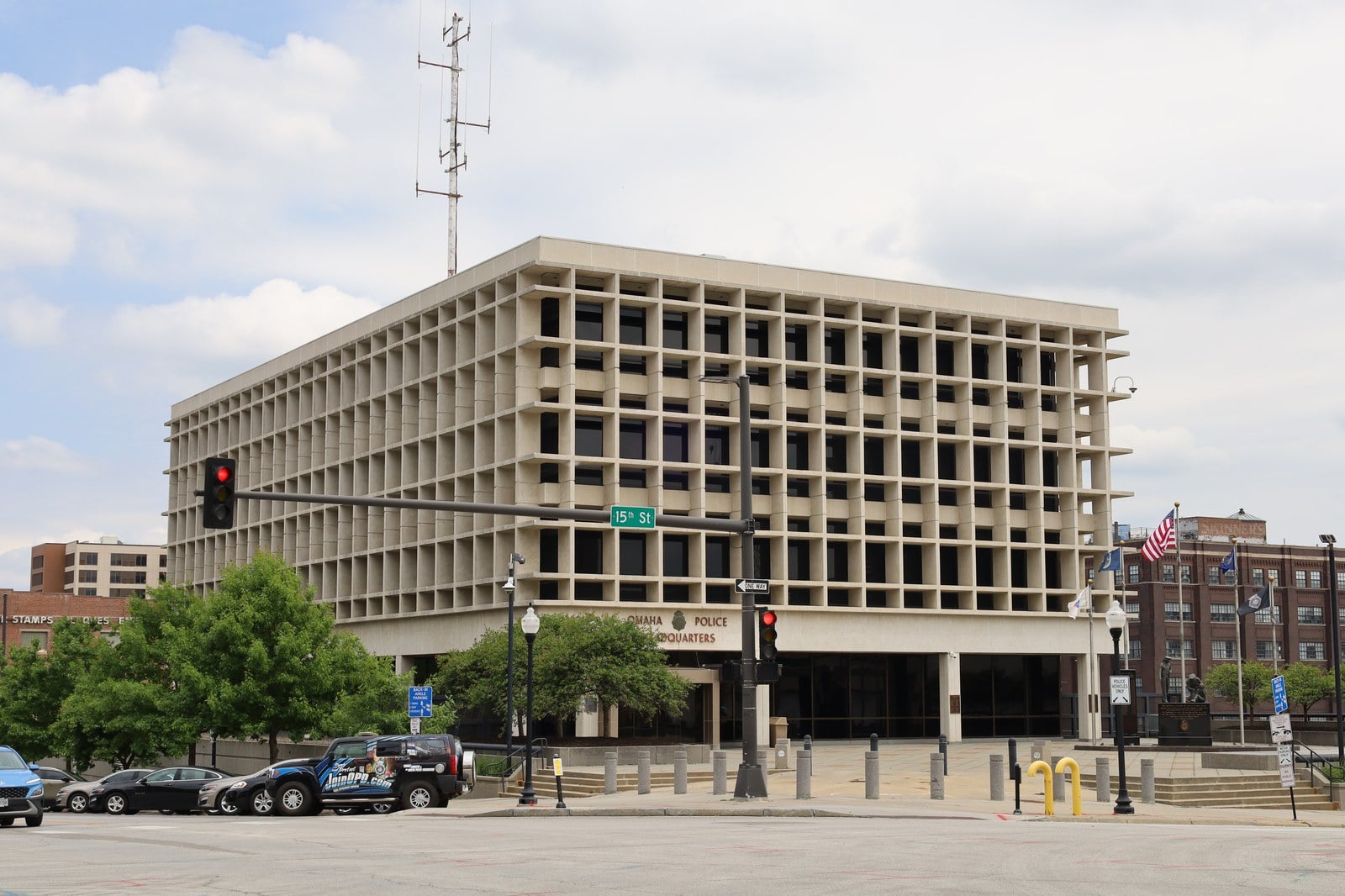
    Omaha Police Headquarters in Omaha, Nebraska
    Omaha Police Headquarters in Omaha, Nebraska, in 2025 (file photo). Photo by Antony-22 / Wikimedia Commons, licensed CC BY-SA 4.0. Source: Wikimedia Commons

    The Omaha Police Department publishes counts of citizen complaints and how they were resolved. Its 2025 Annual Report says those Internal Affairs statistics are on the “Quarterly Reports” tab of its website. This article uses the year-to-date tables in each year’s fourth-quarter report and the table in OPD’s 2024 Annual Report.

    What the findings mean

    After an investigation, the police chief reviews the case file and makes a finding. OPD defines its findings this way:

    • Sustained: “There is enough evidence to prove the allegation is true.”
    • Not-Sustained: “There is not enough evidence to prove or disprove the allegation.”
    • Exonerated: “The incident occurred but was lawful and proper.”
    • Unfounded: “The complaint or allegation is proven false.”
    • Policy Failure: “The incident may or may not have occurred, but the investigation disclosed faulty practices, policies and/or procedures.”

    The reports also list “No Finding/Court Issue.” Oversight Justice did not find a definition of that term in the OPD sources it reviewed.

    2025

    OPD’s Fourth Quarter 2025 report lists 39 citizen complaints received in 2025. The same report lists 121 citizen-complaint dispositions for 2025.

    Of those, the Fourth Quarter 2025 report lists 5 sustained, 3 not sustained, 106 exonerated and 6 unfounded, with 1 open.

    2024

    OPD’s Fourth Quarter 2024 report lists 36 citizen complaints received in 2024. It lists 14 sustained citizen-complaint dispositions, out of 118. The Fourth Quarter 2025 report lists the same 2024 figures: 14 sustained out of 118.

    OPD’s 2024 Annual Report gives different figures for 2024. Its Internal Affairs table lists 16 sustained citizen-complaint dispositions, out of 141. It also lists 18 not sustained, 102 exonerated and 5 unfounded.

    The Annual Report explains that its numbers are “dynamic” and “may vary in previous or subsequent reports.”

    2023

    OPD’s Fourth Quarter 2023 report lists 43 citizen complaints received in 2023. It lists 14 sustained citizen-complaint dispositions, out of 135, with 110 exonerated.

    OPD’s Fourth Quarter 2024 report lists the 2023 figures as 14 sustained out of 139, with 117 exonerated. OPD’s quarterly reports carry the same warning as the Annual Report: the numbers are dynamic and may vary from report to report.

    Why the numbers are hard to compare

    The reports do not say whether a disposition counts a complaint, an allegation or an officer. In 2025, for example, OPD’s Fourth Quarter 2025 report lists 39 complaints received but 121 dispositions. Because the unit is not stated, Oversight Justice is not calculating a share of complaints sustained.

    OPD’s quarterly reports add two warnings. They say accurate statistics “cannot be compiled until 100 days after the complaint is received.” They also say disposition numbers are “subject to change due to open investigations.”

    OPD’s 2024 Annual Report and its quarterly reports say the Internal Affairs statistics include investigations handled by City Human Resources, which investigates citizen complaints and internal investigations involving civilian employees, as well as all harassment allegations.

    Internal complaints are separate

    OPD also counts internal complaints, which come from within the department. The Fourth Quarter 2025 report lists 82 sustained internal-complaint dispositions in 2025.

    The 2024 internal figures also differ between reports. OPD’s 2024 Annual Report lists 86 sustained internal-complaint dispositions for 2024. Its Fourth Quarter 2024 report lists 78.

    What OPD said

    On Nov. 5, 2026, Oversight Justice emailed OPD’s Public Information Office. We asked why the 2024 Annual Report and the Fourth Quarter 2024 report differ (16 and 14 sustained citizen-complaint dispositions; 86 and 78 sustained internal-complaint dispositions), which figures readers should use for 2024, and whether a disposition counts a complaint, an allegation or an officer. We asked for a reply by Thursday, Nov. 12.

    Update (Nov. 13, 2026): OPD did not respond by Nov. 12, the date we asked for. We will update this article if it does.

    How to file a complaint

    OPD tells people to contact its Internal Affairs Unit at 402-444-5629. It advises: “Do not sign the complaint form until you are in the presence of the Internal Affairs investigator.” This article is not legal advice.

    Citizen complaints are investigated by Internal Affairs or referred down the employee’s chain of command, OPD says. The complainant is told the result in a letter from the chief.

    OPD says contract limits mean an investigation may need to finish within 15 to 100 calendar days for discipline to be possible. A complaint can still be investigated later, “however, no disciplinary action could take place.”

    The review board is on hold

    Omaha’s Citizen Complaint Review Board was created by executive order in 2014. The mayor’s office page says the city is “in the process of re-constituing [sic]” the board as an advisory committee and that it will not review complaints during the transition. The page is undated; Oversight Justice viewed it again Nov. 12, 2026.

    OPD’s Fourth Quarter 2025 report lists 1 case reviewed by the board in 2025 and 4 in 2024. The board’s 2023 annual report says it handled three cases with nine allegations. It upheld seven and sent two to the mayor’s office.

    Oversight Justice could not confirm that Omaha has an independent police auditor issuing reports.

    Related: What OPD publishes about use of force and how to file a Nebraska public records request.


    Disclosure: Oversight Justice is owned by David Mitchell, who founded the site and also owns Gamers Hub LLC, which operates as Go Gamers. Mitchell sued Douglas County, the City of Omaha, Douglas County Attorney Don Kleine and others in federal court (Mitchell v. County of Douglas, No. 8:23-cv-00332, D. Neb.). The court dismissed the suit on April 12, 2024, on several grounds, including immunity and failure to state a claim; the 8th U.S. Circuit Court of Appeals affirmed on Feb. 5, 2025. See our About page.

    Sources

    1. Omaha Police Department, Fourth Quarter 2025 report, p. 11
    2. Omaha Police Department, Fourth Quarter 2024 report, p. 11
    3. Omaha Police Department, Fourth Quarter 2023 report, p. 12
    4. Omaha Police Department, 2024 Annual Report, p. 49 (PDF page 50)
    5. Omaha Police Department, 2025 Annual Report, p. 52 (PDF page 53)
    6. Omaha Police Department, “Citizen Complaints”
    7. Omaha Police Department, “Internal Affairs Unit”
    8. City of Omaha Mayor’s Office, “Citizen Complaint Review Board”
    9. Omaha Citizen Complaint Review Board, 2023 Annual Report
    10. Oversight Justice email to the OPD Public Information Office, sent Nov. 5, 2026 (no reply by Nov. 12, 2026, the reply date requested)
    11. Wikimedia Commons: Omaha Police Headquarters 2025.jpg (photo and license)

  • Omaha’s $155 million bond covers more than the police-fire headquarters; council takes up $12.4 million land deal at 75th and Cass

    Omaha’s $155 million bond covers more than the police-fire headquarters; council takes up $12.4 million land deal at 75th and Cass

    By Oversight Justice Staff | Nov. 10, 2026

    Disclosure: Oversight Justice is owned by David Mitchell, who founded the site and also owns Gamers Hub LLC, which operates as Go Gamers. Mitchell sued Douglas County, the City of Omaha, Douglas County Attorney Don Kleine and others in federal court (Mitchell v. County of Douglas, No. 8:23-cv-00332, D. Neb.). The court dismissed the suit on April 12, 2024, on several grounds, including immunity and failure to state a claim; the 8th U.S. Circuit Court of Appeals affirmed on Feb. 5, 2025.

    Omaha Police Headquarters in Omaha, Nebraska
    Omaha Police Headquarters in Omaha, Nebraska, in 2025 (file photo). Photo by Antony-22 / Wikimedia Commons, licensed CC BY-SA 4.0. Source: Wikimedia Commons

    Omaha voters approved a $155 million bond question that city officials tied to a new joint police and fire headquarters. The legal authority voters approved is broader than that one building. It covers a list of city facilities, and the City Council can issue the bonds over time through Dec. 31, 2034, without another public vote.

    A $12.4 million land deal at 75th and Cass streets is on the City Council agenda for Tuesday, Nov. 10. Ordinance 44886 would approve a $12,428,532 real estate purchase and sale agreement between the city and Crossroads Block A, LLC.

    What voters approved

    The question appeared on the Douglas County sample ballot as “Special City Of Omaha Election $155,000,000 Public Facilities Bonds.” It asked whether the city should be authorized to issue general obligation bonds to pay for “acquiring, constructing, improving, equipping and rehabilitating police buildings and facilities, fire stations, branch libraries, park maintenance facilities, auditorium support facilities, arena and convention center facilities, public works storage facilities and city wide building renovations and replacements and other public facilities of the City of Omaha.”

    The ballot put the approximate cost to taxpayers at $155 million “plus interest.” It also said approval “will not incur any increases in the debt services tax levy rate of the City of Omaha over the levy increase approved in 2020.”

    The ordinance behind the question, Ordinance 44779, adds details that were not printed in full on the ballot. It lets the council issue the bonds “from time to time, but no later than December 31, 2034 without further vote of the electorate.” It allows the money to cover “necessary plans and specifications” and “acquiring such land and easements as may be required.” It excludes “the cost of City construction equipment and payment of salaries to City employees.”

    The headquarters is not named in the ballot question or the ordinance title. The Building a Better Omaha committee, which campaigned for the bond, says on its website that the legal authorization “is broader than the Police and Fire headquarters alone” and that city officials have identified the headquarters “as the principal project.”

    How it got on the ballot

    According to City Council journals, Ordinance 44779 had its first reading July 28, 2026, and a public hearing Aug. 4. One person spoke as an opponent at that hearing, and the journal lists a communication in support. The council approved the ordinance Aug. 18 on a 6-0 vote, with Councilmember Aimee Melton absent.

    The vote count so far

    The Douglas County Election Commission’s latest unofficial results, labeled “Unofficial Results 11/06/2026 – 12:15 pm,” show 112,413 yes votes and 50,620 no votes on the $155 million question. That is about 69% yes. The results are unofficial until the county canvass on Thursday, Nov. 19. The commission says early voting ballots that needed more research will be counted Wednesday, Nov. 11, and accepted provisional ballots on Monday, Nov. 16. Our Nov. 6 results story has the full comparison.

    The headquarters plan

    In a Nov. 4 news release, Mayor John W. Ewing Jr.’s office described the project as a four-story police-fire headquarters for “300+ administrative personnel” at 74th Avenue and Cass Street, in the Crossroads area. The release said the current Omaha Police Department headquarters at 15th and Howard streets has spray-on asbestos on its structural steel that requires air quality checks twice a year.

    The Building a Better Omaha committee says the headquarters is currently estimated at about $181 million. It says city officials have said previously authorized bonding capacity is expected to cover the difference above the new $155 million. Oversight Justice has not seen a city cost estimate document confirming that figure.

    The land deal on Tuesday’s agenda

    Item 53 on the Nov. 10 council agenda is Ordinance 44886. The agenda describes it as an ordinance “to approve a Real Estate Purchase and Sale Agreement between the City of Omaha and Crossroads Block A, LLC, for the transfer and sale of real property located at 75th and Cass Streets.” It says the agreement sets a price of $12,428,532.

    The agenda item does not say how the land will be used. WOWT reported that the item is for the new police and fire building. The mayor’s Nov. 4 release places the headquarters at 74th Avenue and Cass Street.

    Tuesday is only the first reading. Under the schedule printed on the agenda, the second reading and public hearing are set for Nov. 24, and the third reading is set for Dec. 8. Members of the public can speak at the Nov. 24 hearing.

    The agenda says the agreement is attached. When Oversight Justice checked the City Clerk’s Nov. 10 agenda page on Tuesday morning, only the agenda itself was posted there.

    Records the public can ask for

    Nebraska’s public records law, Neb. Rev. Stat. § 84-712, gives residents and others the right to examine and get copies of public records. Custodians must respond to a written request no more than four business days after they receive it. These are records residents may want to see as the project moves forward:

    • The purchase and sale agreement for Ordinance 44886, including the legal description of the land and any conditions of the sale.
    • Cost estimates for the headquarters, including the basis for the roughly $181 million figure and how much is expected from the new bonds versus earlier borrowing authority.
    • Design and architect contracts, once the council considers them.
    • Bond issuance documents, when the council authorizes each sale of bonds under Ordinance 44779.

    One limit may apply. Under Neb. Rev. Stat. § 84-712.05(7), the records custodian may withhold “appraisals or appraisal information and negotiation records concerning the purchase or sale, by a public body, of any interest in real or personal property, prior to completion of the purchase or sale.” That means some land-deal records may not be released until the sale is complete.

    Our guide explains how to file a Nebraska public records request.

    Sources

    Disclosure: Oversight Justice is owned by David Mitchell, who founded the site and also owns Gamers Hub LLC, which operates as Go Gamers. Mitchell sued Douglas County, the City of Omaha, Douglas County Attorney Don Kleine and others in federal court (Mitchell v. County of Douglas, No. 8:23-cv-00332, D. Neb.). The court dismissed the suit on April 12, 2024, on several grounds, including immunity and failure to state a claim; the 8th U.S. Circuit Court of Appeals affirmed on Feb. 5, 2025.

  • How to file a Nebraska public records request

    How to file a Nebraska public records request

    Nebraska law lets residents and other interested persons see public records and sets a four-business-day response deadline for written requests. Here is how it works in Omaha and Douglas County.


    Disclosure: Oversight Justice is owned by David Mitchell, who was the plaintiff in a federal lawsuit against Douglas County, the City of Omaha and others. See our About page.

    Nebraska’s public records law lets residents and “all other persons interested” examine public records free of charge during business hours. The law is in Nebraska Revised Statutes §§ 84-712 to 84-712.09.

    This guide explains the basics. It is not legal advice.

    What counts as a public record

    The law covers “all records and documents, regardless of physical form,” of the state, any county, city, village or tax-supported district. Data stays a public record when kept in computer files.

    Some records may be withheld. The law lists them in § 84-712.05. Examples include certain law-enforcement investigation records and some personnel information. If part of a record can be withheld, the agency must release “any reasonably segregable public portion.”

    Put it in writing

    The deadline applies to a written request. The agency must respond “as soon as is practicable and without delay, but not more than four business days after actual receipt of the request.”

    That response must include a cost estimate. It must also give you the records, a written denial, or a written explanation with the earliest practicable date it can fill the request. So the four days is a deadline to respond, not always to hand over everything.

    The day the agency receives your request does not count. Weekends and days the office is closed do not count.

    After you get a cost estimate, you have 10 business days to reply. If you do not, the custodian will not proceed with the request.

    Fees

    You may ask for copies in any form the agency keeps the record in, such as printouts or electronic data. If a record is on the agency’s website, it can point you there instead of copying it.

    Fees may not exceed “the actual added cost of making the copies available.” For Nebraska residents, the first eight cumulative hours of “searching, identifying, physically redacting, or copying” carry no charge for existing staff pay. The fee may not include any charge for “an attorney or any other person” reviewing records “seeking a legal basis to withhold” them. News media count as residents. Nonresidents may be charged for staff and attorney time.

    If the estimate is more than $50, the agency may require a deposit. The agency may waive or reduce fees in the public interest, but it does not have to. The law does not require an agency to create a new record or a new format.

    If you are denied

    A denial must be in writing. It must describe what was withheld, give the specific legal reasons, name the official responsible and explain your right to review. Each agency must keep a file of its denial letters, open to anyone on request.

    You have two main options. You can seek a writ of mandamus in district court. Or you can petition the Nebraska Attorney General, who must decide within 15 calendar days. The AG can also review whether fees are allowed.

    To petition, send a copy of your written request and all correspondence from the agency. The AG accepts petitions by email at ago.pr-om@nebraska.gov, by fax at 402-471-3297, or by mail to Attention: Public Records Petition, PO Box 98920, Lincoln, NE 68509.

    The AG’s office says its disposition letters “in no way constitute an opinion of the Attorney General.”

    In court, the judge decides the matter fresh, and “the burden is on the public body to sustain its action.” A court may award attorney fees to a requester who has “substantially prevailed.”

    Asking the Omaha Police Department

    OPD says requests for its public records “shall be submitted using the City of Omaha Public Records Portal.” You will need to create a user name and password. OPD says it gives an initial response within four business days.

    Police reports, criminal histories and mugshots do not go through the portal. OPD says they may be obtained through its Records Unit. Oversight Justice could not confirm OPD’s fee for a police report because that page was blocked when we tried to open it.

    OPD policy names its Public Information Office as the department’s point of contact for records requests. People without portal access can submit OPD Form 38 to that office in writing.

    Asking Douglas County

    Douglas County says requests must go to individual departments. In a letter quoted by the Attorney General in AG File No. 20261068, dated July 30, 2026, the county wrote: “Douglas County Nebraska has over 20 departments, each keeping their own records. Records requests must be directed to the records custodian of the specific department whose records you seek.” The AG concluded the county “did not violate any provision of the NPRS,” its abbreviation for the Nebraska Public Records Statutes, in that matter.

    An earlier AG file, No. 20241024 (March 1, 2024), describes a request sent through the county’s online records portal. Oversight Justice could not confirm the portal’s address on an official county page. The county website was blocked when we tried to open it.

    Template: Oversight Justice’s request letter

    This is the form Oversight Justice uses. To send your own request, replace “Oversight Justice” with your name or organization and replace the bracketed text. It is not legal advice.

    [Date]

    To: Custodian of Records, [Agency name and, for Douglas County, the specific department]

    From: Oversight Justice, [mailing address], [email]

    Re: Public records request under Neb. Rev. Stat. §§ 84-712 to 84-712.09

    Under Neb. Rev. Stat. § 84-712, Oversight Justice requests [access to / copies of] the following public records, as defined in § 84-712.01(1):

    [Describe the records as specifically as possible: subject, date range, office and document names if known.]

    Format: Oversight Justice requests copies in [electronic / paper] form, if the records are maintained in that form (§ 84-712(3)(a)). If any record is on your website, please provide its location (§ 84-712(3)(a)).

    Fees: Oversight Justice requests an estimate of the expected cost before copying (§ 84-712(4)). Oversight Justice requests that fees be waived or reduced under § 84-712(3)(h), because [explain how the records will help the public understand government operations].

    Response time: § 84-712(4) requires a response as soon as is practicable and without delay, but not more than four business days after actual receipt of this written request.

    Denial: If any part of this request is denied, Oversight Justice requests the written information required by § 84-712.04(1) and release of any reasonably segregable public portion of a record (§ 84-712.06).

    Thank you,
    Oversight Justice


    Disclosure: Oversight Justice is owned by David Mitchell, who was the plaintiff in a federal lawsuit against Douglas County, the City of Omaha and others. See our About page.


    Sources

    1. Neb. Rev. Stat. § 84-712: https://nebraskalegislature.gov/laws/statutes.php?statute=84-712
    2. Neb. Rev. Stat. § 84-712.01: https://nebraskalegislature.gov/laws/statutes.php?statute=84-712.01
    3. Neb. Rev. Stat. § 84-712.03: https://nebraskalegislature.gov/laws/statutes.php?statute=84-712.03
    4. Neb. Rev. Stat. § 84-712.04: https://nebraskalegislature.gov/laws/statutes.php?statute=84-712.04
    5. Neb. Rev. Stat. § 84-712.05: https://nebraskalegislature.gov/laws/statutes.php?statute=84-712.05
    6. Neb. Rev. Stat. § 84-712.06: https://nebraskalegislature.gov/laws/statutes.php?statute=84-712.06
    7. Neb. Rev. Stat. § 84-712.07: https://nebraskalegislature.gov/laws/statutes.php?statute=84-712.07
    8. Neb. Rev. Stat. § 84-712.09: https://nebraskalegislature.gov/laws/statutes.php?statute=84-712.09
    9. Nebraska Attorney General, “Open Government”: https://ago.nebraska.gov/open-government
    10. Nebraska Attorney General, Public Records Petition Form: https://ago.nebraska.gov/sites/default/files/doc/Public%20Records%20Petition%20Form_1.pdf
    11. Nebraska Attorney General, File No. 20261068 (Douglas County), July 30, 2026, listed on the Attorney General’s disposition letters index: https://ago.nebraska.gov/disposition-letters
    12. Nebraska Attorney General, File No. 20241024 (Douglas County), March 1, 2024, listed on the Attorney General’s disposition letters index: https://ago.nebraska.gov/disposition-letters
    13. Omaha Police Department, “Public Records Requests”: https://police.cityofomaha.org/services/citizen-services/omaha-police-department-public-records-requests
    14. Omaha Police Department policy, “Requests for Public Records”: https://public.powerdms.com/OPDEP1/documents/1340961