By Oversight Justice Staff | Nov. 13, 2026
The Nebraska Supreme Court has rejected a new challenge to cellphone “tower dump” evidence used in a Lincoln murder case. Here is what the court decided, what it left open after a 2026 U.S. Supreme Court ruling on phone-location data, and what Nebraska law requires police to show before they can get phone records.
Disclosure: Oversight Justice is owned by David Mitchell, who founded the site and also owns Gamers Hub LLC, which operates as Go Gamers. Mitchell sued Douglas County, the City of Omaha, Douglas County Attorney Don Kleine and others in federal court (Mitchell v. County of Douglas, No. 8:23-cv-00332, D. Neb.). The court dismissed the suit on April 12, 2024, on several grounds, including immunity and failure to state a claim; the 8th U.S. Circuit Court of Appeals affirmed on Feb. 5, 2025. See our About page.
What a tower dump is
A tower dump is “a download of information on all the devices that connected to a particular cell site during a particular interval,” as the Nebraska Supreme Court described it in a 2023 opinion, quoting the U.S. Supreme Court. In the Lincoln case, the court said, the tower dump “included phone numbers for all cell phones that accessed towers near the requested address during the specified timeframe of 30 minutes.”
That means a tower dump can sweep in the phone numbers of people who were simply nearby, not only a suspect’s.
The case
The case, State v. Elias, comes from a Sept. 29, 2019, drive-by shooting on North 7th Street in Lincoln that killed a teenage passenger, according to the court’s 2023 opinion. A Lancaster County jury convicted the defendant of second degree murder, unlawful discharge of a firearm and two counts of use of a weapon to commit a felony.
Law enforcement got the tower dump through a court order under a federal law, 18 U.S.C. § 2703(d), and the Nebraska equivalent, Neb. Rev. Stat. § 86-2,106. The order was issued shortly after the shooting and before the defendant was identified as a suspect, because carriers did not keep the information for more than about 10 days, the court said. The data covered the cell tower nearest the scene, from 15 minutes before the shooting to 15 minutes after. After the arrest, law enforcement found the defendant’s phone number in the tower-dump data.
What the court held in 2023
On direct appeal in 2023, the Nebraska Supreme Court upheld the convictions (State v. Elias, 314 Neb. 494). It held that “on these facts, the tower dump in question was not a search” under the Fourth Amendment. It said the data was “a single snapshot” for a limited place and time, unlike the more than 100 days of location records at issue in the U.S. Supreme Court’s 2018 Carpenter decision.
The court also held, in the alternative, that even if the tower dump was a search, police relied in good faith on the court order, so the evidence could be used. And it added: “We need not and do not opine here on the question of whether a tower dump might, in different circumstances, implicate the Fourth Amendment.”
What the court decided on Oct. 23
With new lawyers, the defendant asked for postconviction relief. He argued, among other things, that his trial lawyer should have raised the First Amendment and a Nebraska notice rule. That rule, in Neb. Rev. Stat. § 86-2,108(1)(e), requires notice by mail to customers in certain cases. His appeal said no notice was mailed to “ANY of the persons whose cell phone data was seized.”
In an opinion filed Oct. 23, 2026, the Nebraska Supreme Court affirmed the Lancaster County District Court’s dismissal of those claims without an evidentiary hearing (State v. Elias, 322 Neb. 671). Justice John R. Freudenberg wrote the opinion; Justice Jason M. Bergevin did not participate. The court said:
- The new arguments were “different ways of framing” the Fourth Amendment challenge it had already decided, so the defendant could not relitigate them.
- “There is no exclusionary rule generally applicable to statutory violations.” The court cited its 2014 decision in State v. Knutson, which held that the Legislature “has provided no remedy for a violation of § 86-2,106” and that the statute does not create an expectation of privacy under the Fourth Amendment.
- Trial counsel was not ineffective for failing to raise arguments that lacked merit or were “too novel.”
The district court had granted an evidentiary hearing on one other claim. That claim was not part of this appeal.
What the U.S. Supreme Court decided in June
On June 29, 2026, the U.S. Supreme Court decided Chatrie v. United States, a case about a “geofence” warrant that required Google to turn over Location History data for phones near a Virginia bank robbery. The court held that police conducted a Fourth Amendment search. “An individual has a reasonable expectation of privacy in records about his cell phone’s location,” Justice Elena Kagan wrote for the majority, and police intrude on that interest “even though for only a limited time, and from a third-party tech company.”
The court did not decide whether the warrant in that case was valid. It sent that question back to the 4th U.S. Circuit Court of Appeals.
In the Oct. 23 opinion, the Nebraska Supreme Court said “Nothing in Chatrie suggested its holding was retroactive.” It said Chatrie does not “call into question” its earlier holding that the good-faith exception applied to the tower-dump data in this case.
The Oct. 23 opinion does not say whether Chatrie changes the court’s 2023 view that a tower dump is not a search. It decided the appeal on other grounds: the earlier ruling bound the defendant, good faith applied, and Chatrie was not retroactive. The 2023 opinion had already left open whether a tower dump could be a search “in different circumstances.”
What Nebraska law requires
Nebraska’s stored-communications law sets different rules for the contents of communications and for records about them.
- Contents: For the contents of an electronic communication stored 180 days or less, a government agency may require a provider to disclose them “only pursuant to a warrant.” (§ 86-2,106(1))
- Records: For a record or other information about a customer, not including contents, the statute says a provider shall disclose it to the government only when the agency uses an administrative subpoena, obtains a warrant, obtains a court order, or has the customer’s consent. (§ 86-2,106(3)(a)(ii))
- The court-order standard: A court order “shall issue only if the governmental entity shows that there is reason to believe” the records sought “are relevant to a legitimate law enforcement inquiry.” (§ 86-2,106(4)) By comparison, the Fourth Amendment says “no Warrants shall issue, but upon probable cause.”
- No notice for records: “A governmental entity receiving records or information under this subsection is not required to provide notice to a subscriber or customer.” (§ 86-2,106(3)(b))
The mailed-notice rule the defendant cited, § 86-2,108(1)(e), applies when notice of a disclosure under subsection (2) of § 86-2,106 has been delayed. That subsection covers the contents of communications held by remote computing services. The Lancaster County District Court reasoned that notice is required only for the “contents” of a communication, which the tower-dump information was not, according to the Oct. 23 opinion.
The law does allow a lawsuit. Under § 86-2,110, a provider, subscriber or customer harmed by a “knowing or intentional” violation may sue for relief, including damages of at least $1,000. But good-faith reliance on a court warrant or order “shall be a complete defense.” A suit must be filed within two years after the person discovered, or had a reasonable chance to discover, the violation. This article is not legal advice.
Why it matters
A tower dump can collect the phone numbers of everyone whose phone connected to a tower near a crime scene during the time window. Under Nebraska’s statute, police can get those records with a court order by showing “reason to believe” they are relevant to a legitimate law enforcement inquiry, and the people whose numbers are collected do not have to be told.
The U.S. Supreme Court has now said that getting a person’s phone-location records can be a search. Whether Nebraska courts will treat future tower dumps the same way is still undecided.
Related: How to look up a Nebraska court case, How to file a Nebraska public records request and What Omaha police publish about use of force.
Disclosure: Oversight Justice is owned by David Mitchell, who founded the site and also owns Gamers Hub LLC, which operates as Go Gamers. Mitchell sued Douglas County, the City of Omaha, Douglas County Attorney Don Kleine and others in federal court (Mitchell v. County of Douglas, No. 8:23-cv-00332, D. Neb.). The court dismissed the suit on April 12, 2024, on several grounds, including immunity and failure to state a claim; the 8th U.S. Circuit Court of Appeals affirmed on Feb. 5, 2025. See our About page.
Sources
- Nebraska Supreme Court, State v. Elias, 322 Neb. 671 (filed Oct. 23, 2026), No. S-25-395
- Nebraska Supreme Court, State v. Elias, 314 Neb. 494 (2023), No. S-22-443
- U.S. Supreme Court, Chatrie v. United States, No. 25-112 (decided June 29, 2026), syllabus and slip op. at 2
- Nebraska Legislature, Neb. Rev. Stat. § 86-2,106 (with annotation to State v. Knutson, 288 Neb. 823 (2014))
- Nebraska Legislature, Neb. Rev. Stat. § 86-2,108
- Nebraska Legislature, Neb. Rev. Stat. § 86-2,110
- Nebraska Legislature, Neb. Rev. Stat. § 86-274 (“contents” defined)
- National Archives, The Bill of Rights: A Transcription (Fourth Amendment)
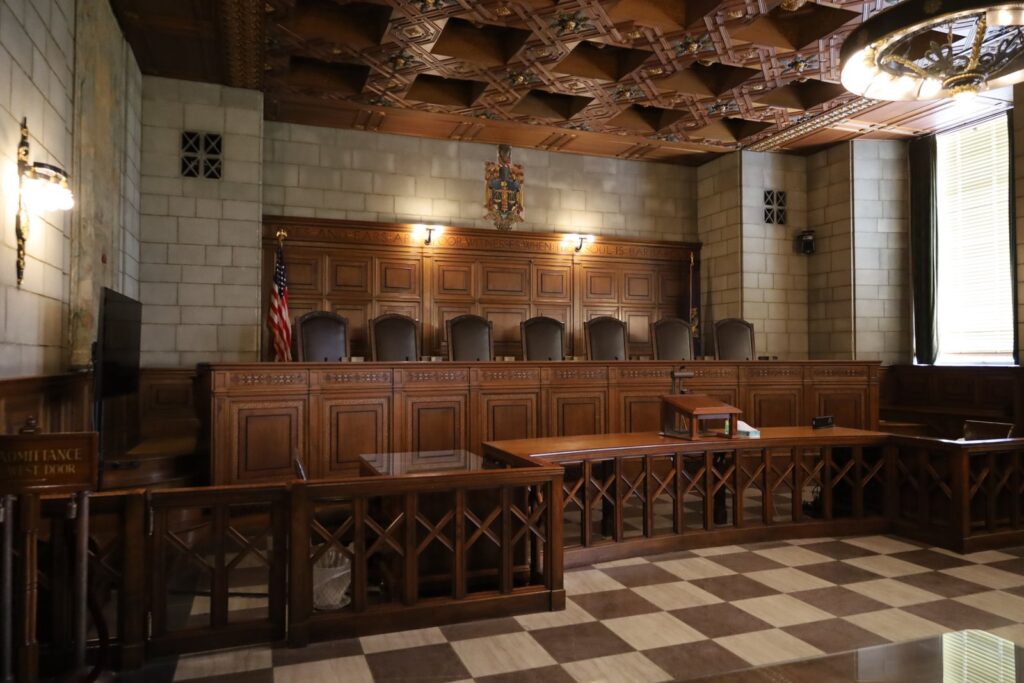
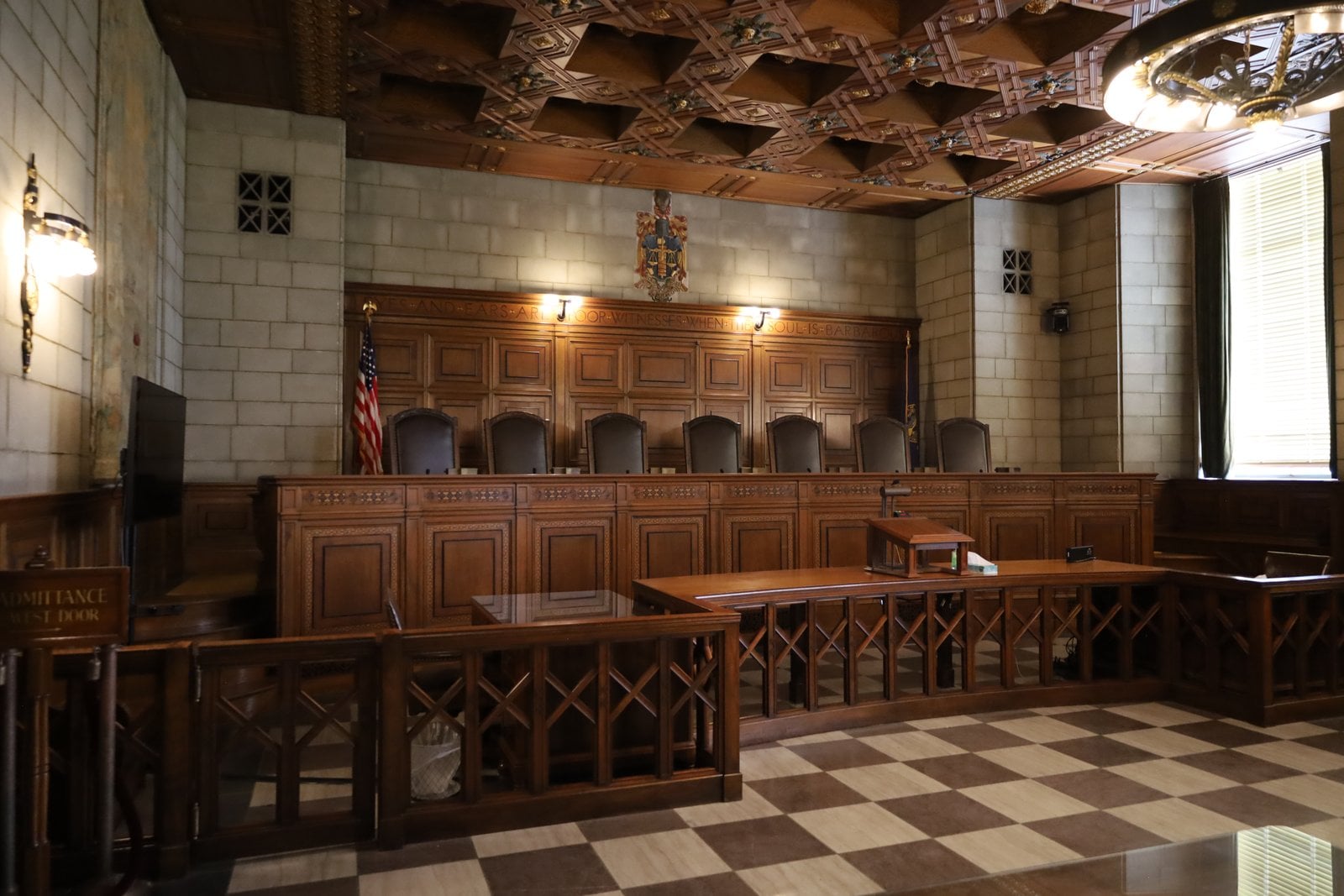
- Wikimedia Commons: Supreme Court Chamber Nebraska State Capitol 2025a.jpg (photo and license)