By Oversight Justice Staff | Nov. 23, 2026
Disclosure: Oversight Justice is owned by David Mitchell, who founded the site and also co-owns Gamers Hub LLC, which operates as Gamers. Mitchell sued Douglas County, the City of Omaha, Douglas County Attorney Don Kleine and others in federal court (Mitchell v. County of Douglas, No. 8:23-cv-00332, D. Neb.). The court dismissed the suit on April 12, 2024, on several grounds, including immunity and failure to state a claim; the 8th U.S. Circuit Court of Appeals affirmed on Feb. 5, 2025. He has no connection to the matters described here. This article is general information, not legal advice. See our About page.
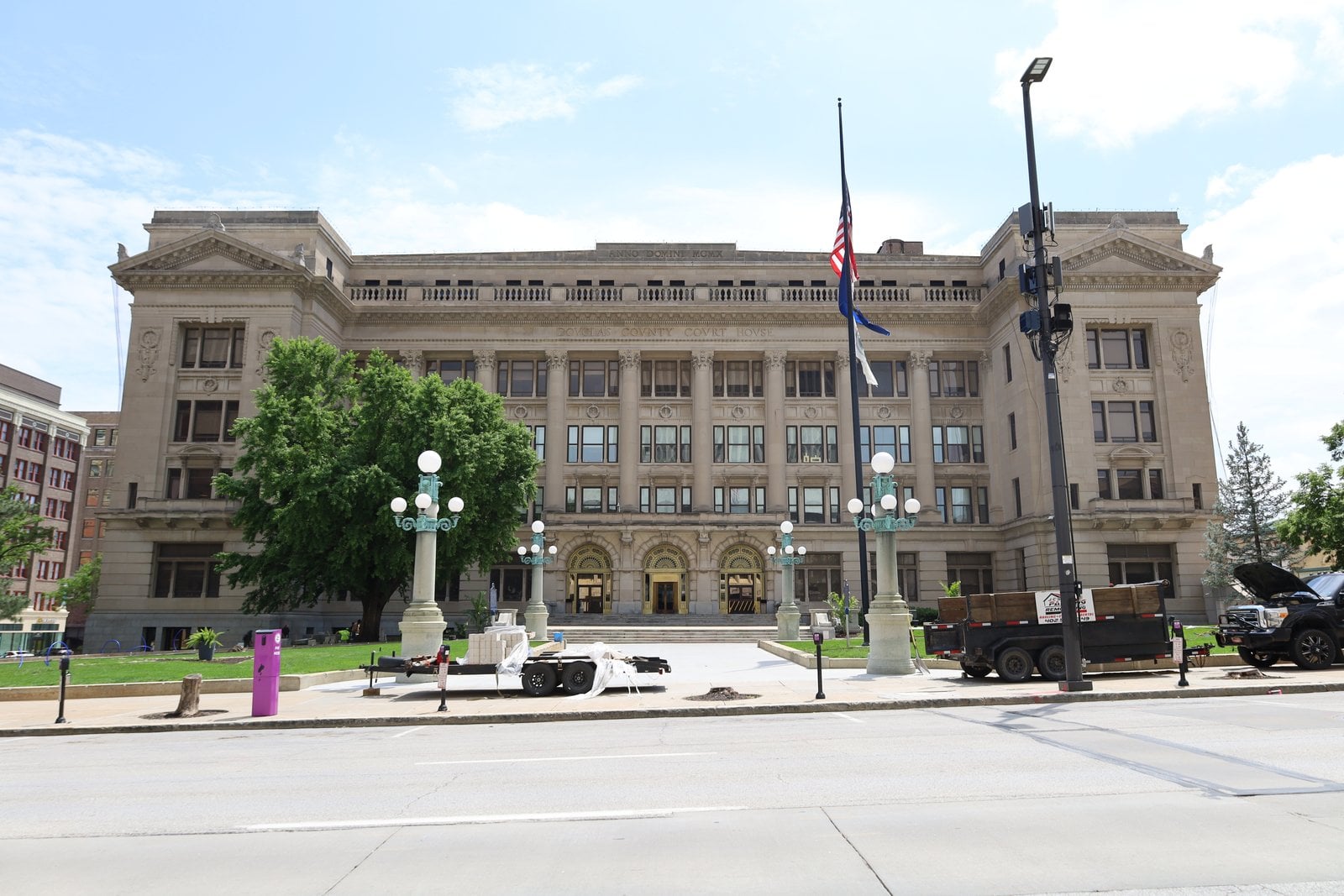
Douglas County bought 25,927 Dollar General gift cards worth $759,425 from 2023 through 2025 to give poor residents vouchers for hygiene, cleaning and clothing items, but it did not track which card went to which client and had no procedures to check what the cards bought, according to a letter from the Nebraska Auditor of Public Accounts.
When the auditor’s office pulled Dollar General’s transaction records for a random sample of 100 cards, it found cards used for cigarettes, beer, food, toys, candy and pet products, and others redeemed through an online payment platform. The office questioned 70.26% of the value it tested.
The Sept. 22, 2026, letter, addressed to Douglas County Board of Commissioners Chairperson Roger Garcia and signed by Deputy Auditor Craig Kubicek, also says that in 16 general assistance cases the office picked as higher-risk, about 70% of the benefits tested were “questionable due to incomplete or inaccurate eligibility determinations.” The county’s Department of General Assistance, in a written response attached to the letter, said it “does not minimize the eligibility determination issues identified and accepts responsibility for the deficiencies noted,” while disputing parts of the findings.
The program
Nebraska law makes each county board “the overseer of the poor” and requires general assistance “adequate to insure maintenance of minimum health and decency.” Each county must adopt written standards of eligibility and assistance. In Douglas County, the program is run by the Department of General Assistance under guidelines adopted by the County Board.
According to the letter:
- The department provided $8,640,303 in shelter, cremation and bus ticket assistance from Jan. 1, 2023, through Dec. 31, 2025, most of it ($8,192,075) for shelter, such as rent and utilities. Total assistance grew 45% from 2023 to 2025.
- On top of that, the department bought the $759,425 in Dollar General gift cards for its non-food and clothing vouchers: $25 a month for personal hygiene and cleanliness items and $80 every six months for clothing.
- Administrative costs to run the department totaled $6,987,461 over the three years, including $5,404,177 in payroll. The department had 18 staff members as of September 2026.
- Thirty clients received rental assistance for the entire three-year period, totaling $570,140, and another 128 received it for two or more years, totaling $2,150,841. The guidelines for 2024 and 2025 specified no maximum eligibility period for continuous assistance.
In a news release issued with the letter, State Auditor Mike Foley said the county spent roughly $74 on administration for every $100 of assistance over the three years, and said “such a high administrative burden relative to the benefits disbursed is troubling and raises questions as to whether a more efficient system can be found.”
What the gift card sample showed
The letter says the department “performed no procedures to ensure that clients were using the gift cards only for allowable purchases, or previously issued gift cards had been fully used prior to issuing additional gift cards.” Because the department had no records of what clients bought, the auditor’s office asked Dollar General directly for itemized histories of 100 randomly selected cards with an original value of $2,670. The letter reports:
- Twenty-four cards were used to buy tobacco products and alcoholic beverages, totaling $286, or 10.71% of the value tested. The guidelines expressly prohibit unauthorized items, citing “tobacco, tobacco products, and alcoholic beverages, etc.” as examples. The letter’s receipt examples include Montego menthol cigarettes, Mike’s Harder Lemonade and a 25-ounce Natty Daddy beer.
- Fifty-eight cards were used for other items, totaling $1,031, including “food, toys, pet care products, energy drinks, and candy,” none of which appear to fit within the voucher categories, the letter says.
- Three cards, totaling $75, were fully redeemed through the OpenBucks payment platform, which the letter says lets gift card credentials be used online for “virtual items, digital currency, and online video game modifications.”
- Neither Dollar General nor the department could provide transaction details for $319 on 29 cards, and 23 cards had a total of $165 that was never used.
Applying the 70.26% questioned rate to all $759,425 in cards “would result in $533,572 being potentially at risk for abuse or waste,” the letter says. That figure is a projection from the sample, not a count of improper purchases.
No record of who got which card
Clients must pick up cards in person and sign an acknowledgment form, and staff record the voucher in the department’s electronic case system. But the letter says the department “does not track to whom each card is provided,” so it “has no way of readily identifying, much less taking recourse against, any client who has used a gift card for improper purchases.”
The auditor’s office sampled 16 cases in which gift cards were approved. In 14 of them, the cards were recorded as distributed, but the department could not produce any of the signed acknowledgment forms. The department’s practice was to destroy those forms after one year, the letter says, even though the records retention schedule for the department (Schedule 126) requires general assistance case files to be kept for at least five years (paper) or six years (electronic) after a case closes. As a result, the auditor’s office could not verify that cards recorded in the system went to the intended recipients.
The County Board amended the guidelines effective Jan. 1, 2026, to cut off further vouchers to clients who use them for unauthorized purposes. The letter says that rule “appears to be unenforceable” unless the department starts tracking individual cards.
Eligibility errors in higher-risk cases
The department processed 5,119 unique general assistance cases from 2023 through 2025. The auditor’s office compared case data with state wage, public assistance and other records and chose 16 case files that appeared to be at higher risk of improper benefits. Of $21,155 in approved benefits tested, it counted $14,768 as overpayments, or 69.81%, treating payments as overpayments when documentation was insufficient to support a client’s income and resources or the client did not comply with program rules.
Applied to the $8,640,303 in shelter, cremation and bus ticket assistance, that rate would put $6,031,796 “potentially at risk for abuse,” the letter says. It also cautions that this “projected amount may be high because the APA selected a judgmental sample of apparent higher risk case files,” while adding that “pervasive issues occurred in the Department’s eligibility and benefit determinations that warrant further attention.”
Examples in the letter, which identifies clients only by case number, include:
- A client with a 2021 Kia Forte valued at $17,300, above the guidelines’ $12,000 vehicle exclusion, who continued to receive $2,175 for three months after a 60-day period to sell the vehicle expired, with no documentation that it was sold.
- A client approved for $8,090 over June 2023 through June 2024 who was required to appeal a denial of Supplemental Security Income and later to apply for it; the letter says there was no documentation the client did either, and $4,960 was paid after the client failed to comply. A $500 loan deposited into the same client’s account was left out of one month’s calculation, resulting in an extra $350.
- Clients whose bank statements showed Cash App or Venmo deposits, where the department did not obtain statements for those accounts.
- Monthly reporting forms missing for 4 of the 16 cases, with benefits still authorized for the following month, and in one case forms for three months that appear to have been copied from the same document.
- A standing practice of not counting SNAP food benefits as income, which the auditor’s office says should count under the guidelines’ definition of unearned income, which includes money from government entitlement programs. The letter attributes $688 in overpayments to that exclusion in cases where no other error already accounted for them.
The letter also says the guidelines do not spell out how to calculate income and resources, leading to “inconsistent practices, such as determining income from paystubs in some instances but bank statement deposits in others.”
The county’s response
The department’s response, attached to the letter as Attachment A, says:
- It “acknowledges this finding and agrees that tobacco, alcohol, and other non-compliant purchases are inconsistent with the program’s intent and Guidelines.” Dollar General did not sell tobacco or alcohol when the program began, it says, and the department tried for several years, without success, to get point-of-sale restrictions from the retailer, and it looked at Walmart gift cards, which could not handle the volume needed.
- It “was not previously aware” that gift card credentials could be redeemed through a third-party platform and will raise the issue with Dollar General.
- It agrees that food, toys, pet care products and similar items fall outside the guidelines, but says “some purchases may nonetheless reflect genuine hardship needs among participants.”
- It “has already discontinued the prior practice” on gift card record retention and updated its policy.
- The 16 cases were chosen as higher-risk, and the department says the majority of its caseload “involves clients with little to no income or countable resources affecting eligibility.”
- It partially concurs with, or disputes, several case findings, including those on unemployment benefits and monthly reporting forms. On SNAP, it says its longstanding practice of not counting the benefits was reasonable because SNAP may be used only for eligible food purchases, but it will address the issue in the next guideline revision. It says guideline revisions effective Jan. 1, 2026, require disabled clients to pursue Social Security benefits and limit able-bodied applicants to six months of assistance a year.
- It is consulting with the County Attorney’s Office on guidance for fraud-related overpayments and restitution, including “the legal and financial considerations of civil or criminal recovery.”
- It will give the auditor’s office and the County Board “a corrective action plan, including target implementation dates.”
The auditor’s office noted that “[a] response that indicates corrective action has been taken was not verified at this time.” It decided a separate financial audit or attestation of the department “is unnecessary at this time because the County is audited on an annual basis.”
What the letter does not say
- Projections are not findings of loss. The $533,572 and $6,031,796 figures are the auditor’s projections from small samples, and the letter says the eligibility projection may be high.
- No charges described. The letter does not say that any client or employee has been charged with a crime, and it does not name any client. The department’s consultation with the County Attorney’s Office, described in its response, concerns general guidance on fraud-related overpayments, particularly cases under $5,000.
- Corrective steps not verified. The auditor’s office did not verify the department’s statements about changes it has made.
- Sources and limits. This article is based on the auditor’s letter, the auditor’s news release and the state statutes cited. Oversight Justice has not asked the county, the auditor’s office or Dollar General for comment, and this article does not track any action the county has taken since the letter was released.
Sources
- Nebraska Auditor of Public Accounts, letter to Douglas County Board of Commissioners Chairperson Roger Garcia regarding the Douglas County General Assistance Program (Sept. 22, 2026): https://auditors.nebraska.gov/APA_Reports/2026/CO28-09222026-September_22_2026_Douglas_County_General_Assistance_Program_Letter.pdf
- Nebraska Auditor of Public Accounts, news release, “Auditor Foley Calls for Reform of the Douglas County General Assistance Program” (Sept. 22, 2026): https://auditors.nebraska.gov/APA_Reports/2026/CO28-09222026-Douglas_County_General_Assistance_Program_Letter_Press_Release.pdf
- Nebraska Auditor of Public Accounts, reports issued for Douglas County: https://www.nebraska.gov/auditor/FileSearch/entityresults.cgi?id=Douglas+County
- Neb. Rev. Stat. § 68-132 (county board; overseer of the poor): https://nebraskalegislature.gov/laws/statutes.php?statute=68-132
- Neb. Rev. Stat. § 68-133 (county standards of eligibility and assistance): https://nebraskalegislature.gov/laws/statutes.php?statute=68-133
- Related on this site: State auditor letter on Douglas County Garage scrap cash; Public Records & FOIA Resource Hub