
Category: Police Accountability

  • After a police raid and years in court, Black business owner David Mitchell is bringing Gamers back to Omaha

    After a police raid and years in court, Black business owner David Mitchell is bringing Gamers back to Omaha

    By Oversight Justice Staff | Nov. 14, 2026

    Disclosure: This is a story about the owner of this website. Oversight Justice is owned by David Mitchell, who founded the site and also owns Gamers Hub LLC, which operates as Go Gamers. Mitchell sued Douglas County, the City of Omaha, Douglas County Attorney Don Kleine and others in federal court (Mitchell v. County of Douglas, No. 8:23-cv-00332, D. Neb.). The court dismissed the suit on April 12, 2024, on several grounds, including immunity and failure to state a claim; the 8th U.S. Circuit Court of Appeals affirmed on Feb. 5, 2025. See our About page.

    OMAHA — In 2019, police searched David Mitchell’s Gamers video game store in Lincoln. What followed was a burglary charge, a separate sexual assault trial and three years in and out of court. Mitchell, a Black business owner from Omaha, says he was targeted.

    The burglary charge was dismissed in August 2022. Mitchell says a jury found him not guilty in the other case. And on Saturday, Nov. 21, 2026, the business he refused to let go of is scheduled to open a new store in Omaha, at 9959 Redick Cir.

    This is the story of how he got here, told from court records, news reports and, where marked, Mitchell’s own account.

    David Mitchell, owner of Gamers, standing behind the counter of a Gamers video game store
    David Mitchell, owner of Gamers, inside a Gamers store. Photo courtesy of David Mitchell.

    The 2019 search of his Lincoln store

    In 2019, police searched Mitchell’s Gamers store in Lincoln. A 2022 article in The American Reporter said officers from the Omaha and Lincoln police departments worked together on the raid. Mitchell says the case against him was built on a false report.

    That September, KMTV 3 News Now reported that Mitchell, then 26 and the owner of Gamers, had been arrested and booked on charges connected to the burglary of a competing video game store.

    Mitchell later described the search in a federal lawsuit. According to the court’s summary of his complaint, he alleged that an Omaha police detective lied in grand jury testimony to obtain an arrest warrant for him and a search warrant for one of his businesses, and that the search turned up about 10 items out of an inventory of more than 25,000. He also alleged that there was no evidence of physical entry, a required element of burglary. The court did not decide whether those allegations were true.

    Charges that did not stand

    On Aug. 12, 2022, the burglary charge was dismissed. The office of Douglas County District Judge Timothy Burns confirmed the dismissal to 3 News Now, according to the station. According to the court’s summary of his complaint, the case ended shortly before trial.

    In a separate case filed in 2020, Mitchell was charged with sexual assault. Mitchell says a jury found him not guilty in October 2021. His federal complaint says that case ended “in a manner indicative of the plaintiff’s innocence” on Oct. 21, 2021, and The American Reporter reported that a Douglas County District Court jury decided he did not commit the offense. Oversight Justice has not yet obtained the court clerk’s record of that verdict.

    Taking on the county’s top prosecutor

    Mitchell says the charges were part of a campaign against him. In August 2023, he sued Douglas County, the City of Omaha, Douglas County Attorney Don Kleine, deputy county attorneys and Omaha police officers in federal court. As the court summarized it, the heart of his complaint was an alleged conspiracy “orchestrated by Douglas County Attorney Donald Kleine” to charge him with crimes he did not commit, which he said was meant to chill his “Black Lives Matter” advocacy.

    He lost that fight in court. On April 12, 2024, a federal judge dismissed the suit. The court held that Kleine and four other county attorneys had absolute prosecutorial immunity and dismissed the remaining claims on other grounds, including immunity and failure to state a claim. The ruling came at the earliest stage of the case and did not decide whether his allegations were true. The 8th Circuit affirmed on Feb. 5, 2025. Read what the court ruled, defendant by defendant.

    Mitchell told his side in an August 2025 documentary on the Oversight Justice YouTube channel, titled “Most Corrupt Police Department and Prosecutors Office Exposed | Omaha, Nebraska.” The title is the film’s own characterization, and the officials it criticizes may dispute its claims.

    Starting over

    Mitchell’s story with Gamers started before any of this. The original Gamers chain closed all of its locations in 2018, its owner told KETV. Mitchell then took over the Gamers name, according to the company’s website, which says he reopened the first store at 124th and Center in Omaha in February 2019. The company says it later opened stores in North Omaha and Sioux City.

    Today, the company says, Gamers runs one store, at 2711 King Ln. in Lincoln, along with online sales and mail-in console repair. Mitchell says that after years of fighting the charges, he had to rebuild his business from scratch.

    He kept going. His company, Gamers Hub LLC, has been registered in Nebraska since November 2020, and it also runs a console repair business, Game Repair Shop, out of the Lincoln store.

    The comeback: Gamers Omaha opens Nov. 21

    The next chapter starts in Omaha. Gamers says its new store at 9959 Redick Cir, will hold its grand opening Saturday, Nov. 21, 2026, from noon to 8 p.m. After opening day, the company says, the store will be open daily from noon to 8 p.m.

    The company says the store will buy, sell and trade video games, consoles and accessories, and will offer console repair. The phone number is 402-703-4403; callers can choose the Omaha location. Details on the Omaha opening.

    For Mitchell, the store in the city where he was charged is more than a new location. It is the place he has chosen to start again.

    How we reported this

    This article relies on the federal court’s April 12, 2024, order in Mitchell v. County of Douglas, which summarizes Mitchell’s complaint; the 8th Circuit’s Feb. 5, 2025, opinion; KMTV 3 News Now and KETV reports; a 2022 article in The American Reporter; Nebraska Secretary of State records; and the Gamers website. Allegations in Mitchell’s lawsuit are his claims; the court did not find them true or false. Statements that rest only on Mitchell’s account are labeled. Questions or corrections: dave@oversightjustice.com. More about the owner: David Mitchell.


    Disclosure: Oversight Justice is owned by David Mitchell, who founded the site and also owns Gamers Hub LLC, which operates as Go Gamers. Mitchell sued Douglas County, the City of Omaha, Douglas County Attorney Don Kleine and others in federal court (Mitchell v. County of Douglas, No. 8:23-cv-00332, D. Neb.). The court dismissed the suit on April 12, 2024, on several grounds, including immunity and failure to state a claim; the 8th U.S. Circuit Court of Appeals affirmed on Feb. 5, 2025. See our About page.

    Sources

    1. Mitchell v. County of Douglas, No. 8:23-cv-00332 (D. Neb.), Memorandum and Order, April 12, 2024 (Doc 44)
    2. Mitchell v. County of Douglas, No. 24-1839 (8th Cir. Feb. 5, 2025), unpublished per curiam
    3. KMTV 3 News Now, Sept. 11, 2019, with update Aug. 23, 2022
    4. KETV, “Gamers closes all locations,” Oct. 1, 2018
    5. The American Reporter, Kyle Matthews, Aug. 21, 2022
    6. Gamers, “About Us” (company website)
    7. Oversight Justice on YouTube, documentary published Aug. 25, 2025
    8. Nebraska Secretary of State business records: Gamers Hub LLC (domestic LLC, filed Nov. 18, 2020); trade names GAME REPAIR SHOP and GO GAMERS
  • Nebraska Supreme Court: Driving a DUI suspect to a police headquarters garage for sobriety tests was not an arrest, but weather won’t always justify it

    Nebraska Supreme Court: Driving a DUI suspect to a police headquarters garage for sobriety tests was not an arrest, but weather won’t always justify it

    By Oversight Justice Staff | Nov. 14, 2026

    Police in downtown Omaha did not turn a drunken-driving investigation into an arrest when they drove a driver three or four blocks to a parking garage attached to police headquarters for field sobriety tests, the Nebraska Supreme Court ruled Nov. 13. But the court also warned that bad weather “will not justify transporting a suspect under all circumstances.” Here is what the court decided, the test it used, and what Nebraska law says about breath tests during a traffic stop.

    Disclosure: Oversight Justice is owned by David Mitchell, who founded the site and also owns Gamers Hub LLC, which operates as Go Gamers. Mitchell sued Douglas County, the City of Omaha, Douglas County Attorney Don Kleine and others in federal court (Mitchell v. County of Douglas, No. 8:23-cv-00332, D. Neb.). The court dismissed the suit on April 12, 2024, on several grounds, including immunity and failure to state a claim; the 8th U.S. Circuit Court of Appeals affirmed on Feb. 5, 2025. See our About page.

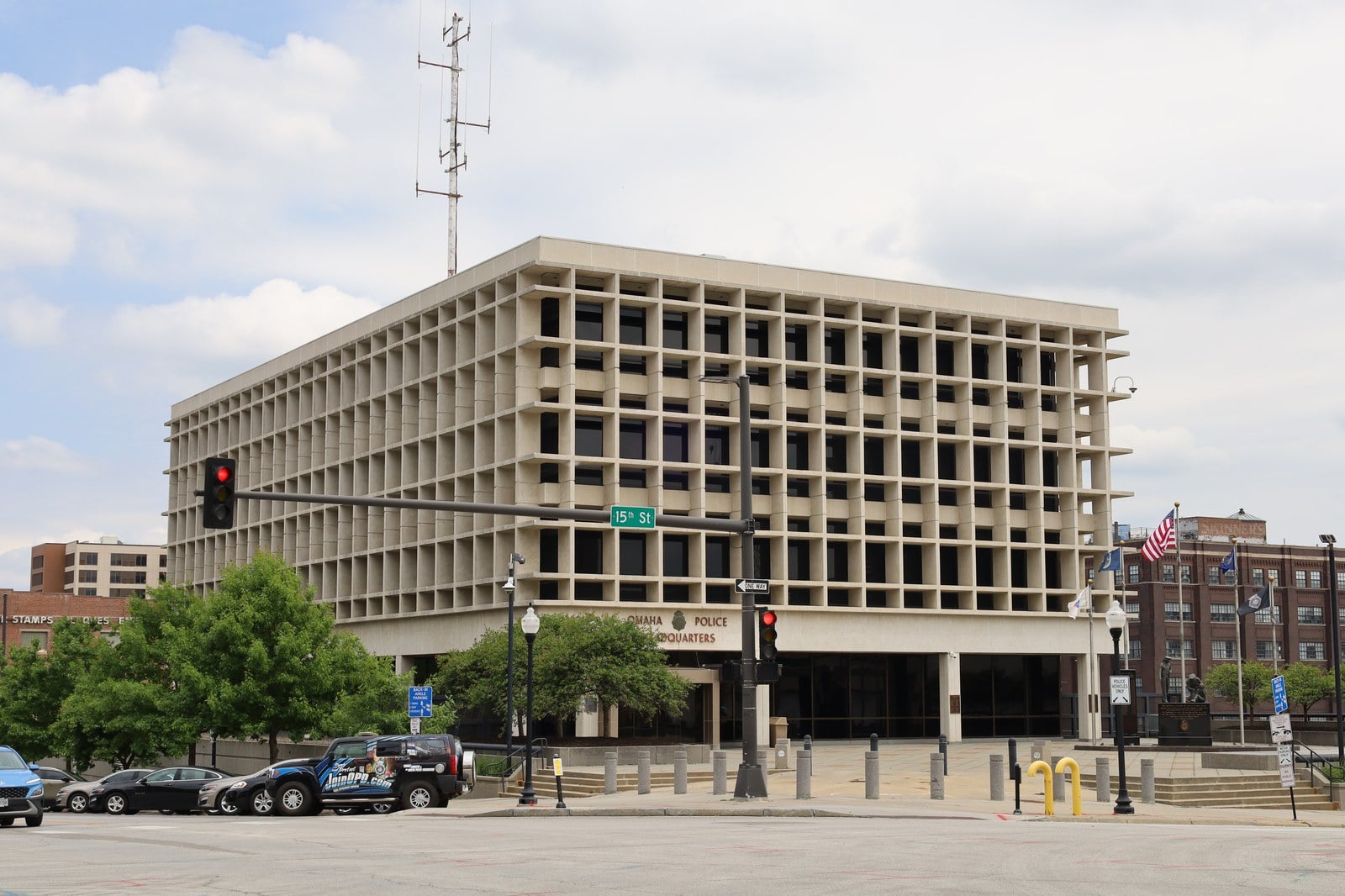
    Omaha Police Headquarters in downtown Omaha
    Omaha Police Headquarters in downtown Omaha, in 2025 (file photo). The court’s opinion describes a parking garage attached to “police headquarters” downtown; it does not name the department. Photo by Antony-22 / Wikimedia Commons, licensed CC BY-SA 4.0. Source: Wikimedia Commons

    What happened

    The case, State v. Saunsoci, began with a traffic stop on Feb. 11, 2025, according to the court’s opinion. Two uniformed officers in a marked cruiser were on patrol in the Old Market area of downtown Omaha. At about 8:45 p.m. at 11th and Howard streets, they saw a car they said was “traveling at a pace that is above the normal pace” toward a stop sign and had “no plates and no visible in-transits” that they could see. They stopped it.

    The driver told an officer she did not have a driver’s license. The officers said she seemed confused and had trouble giving her ZIP code. One officer said, “I don’t smell anything, but she’s acting awful weird.” She said she had not been drinking but had taken “weed . . . little edible things” earlier in the day. A records check showed three prior DUI convictions and a revoked license, the opinion says.

    It was snowing, and one officer testified that the temperature was “like, 10 degrees.” The officers did not want to give walking and balance tests on the cobblestone street. The officers had already put the driver in their cruiser to get her out of the weather. They drove her to the parking garage at police headquarters, which an officer said was “three or four blocks” away. They entered through a secured entrance that only police could use. One officer testified that driving people to the garage for the tests in rain, snow or ice was normal.

    The driver was not handcuffed on the way or during the tests, the opinion says. In the garage, an officer noticed a “moderate smell of alcohol.” A preliminary breath test showed a breath alcohol concentration of .165. Officers then arrested and handcuffed her and took her inside headquarters, where a DataMaster breath test showed .128. Nebraska’s legal limit is .08 (Neb. Rev. Stat. § 60-6,196).

    Before trial, the driver asked the Douglas County District Court to throw out the evidence. She argued that once officers moved her to police headquarters, the stop became an arrest, and they did not have probable cause to arrest her at that point. District Judge Molly B. Keane denied the motion, finding the garage “was instead a convenient, dry location for field sobriety tests.” After a bench trial, the judge found her guilty of DUI, fourth offense, and sentenced her to 90 days’ imprisonment, a $2,000 fine, three years of probation and a 15-year license revocation. The Douglas County Public Defender’s office handled the appeal.

    What the Supreme Court decided

    The Nebraska Supreme Court affirmed the conviction. Justice Bergevin wrote the opinion; no justice wrote separately. The court said:

    • No bright-line rule. The driver relied on U.S. Supreme Court cases holding that when police “forcibly remove a person from his home or other place in which he is entitled to be and transport him to the police station” for investigation, the seizure is “sufficiently like arrests” to require probable cause (Hayes v. Florida, 1985). The Nebraska court said those cases involved people taken from their homes for things like fingerprinting and interrogation. “[W]e determine that there is no bright-line rule that transporting Saunsoci raised the level of the encounter to an arrest,” it wrote.
    • Safety can justify a move. The court relied on the U.S. Supreme Court’s statement in Florida v. Royer (1983, plurality opinion) that “there are undoubtedly reasons of safety and security that would justify moving a suspect from one location to another during an investigatory detention.”
    • The facts here. The drive took “only a few minutes.” The tests in the garage took about 10 minutes, and the whole encounter, from the stop to the end of the tests, took about 35 minutes. Officers used only DUI-investigation steps, not fingerprinting or a room for interrogation, and did no full search before or during the transport. The garage was “a parking area for vehicles and not a place for detaining persons.” An officer testified that the driver could have left the garage on her own if she had not been detained.

    The court concluded that moving her “was within the scope of the investigative detention and did not transform the encounter into an arrest requiring probable cause.” Because of that, it did not decide whether officers already had probable cause to arrest her before the transport.

    The limits the court set

    The opinion includes a warning: “we do not think that merely identifying safety and security concerns based on weather conditions is sufficient to show that transporting a suspect is within the scope of an investigative detention.” It added: “We therefore caution that unfavorable weather conditions will not justify transporting a suspect under all circumstances.”

    The court also noted that a Utah case it relied on was different in one “significant aspect”: there, the driver agreed to be moved. “There is no evidence in this case that the officers sought consent or that Saunsoci gave her consent to be transported,” the court wrote.

    Courts judge each case on its facts. In deciding whether a stop has become an arrest, the court said, judges look at “(1) the law enforcement purposes served by the detention, (2) the diligence with which law enforcement pursues the investigation, (3) the scope and intrusiveness of the detention, and (4) the duration of the detention.” Police may not “attempt to verify their suspicions by means that approach the circumstances of an arrest,” and the methods used “should be the least intrusive means reasonably available to verify or dispel the officer’s suspicion in a short period of time.”

    The rules for a traffic stop, as the court described them

    • A traffic stop is a seizure under the Fourth Amendment. “A traffic violation, no matter how minor, creates probable cause to stop the driver of a vehicle.”
    • “A lawful traffic stop can become unlawful if it is prolonged beyond the time reasonably required to complete the mission of the stop.”
    • To keep a driver for field sobriety tests, an officer needs only “a reasonable, articulable suspicion” that the person was driving under the influence. That is “something more than an inchoate and unparticularized hunch, but less than the level of suspicion required for probable cause.”
    • An arrest requires probable cause.

    What Nebraska law says about breath tests

    • Preliminary breath test: An officer may require a driver to take a preliminary breath test if the officer “has reasonable grounds to believe that such person has alcohol in his or her body, has committed a moving traffic violation, or has been involved in a traffic accident.” A person who refuses, or whose result is over the legal limit, “shall be placed under arrest.” Refusing is a Class V misdemeanor. (Neb. Rev. Stat. § 60-6,197.04)
    • Implied consent: Anyone who drives in Nebraska “shall be deemed to have given his or her consent” to a chemical test of blood, breath or urine. After an arrest for DUI, an officer with reasonable grounds may require the test. Refusing can lead to administrative license revocation and is itself a crime. (Neb. Rev. Stat. § 60-6,197)

    This article is not legal advice.

    Why it matters

    The ruling means Nebraska police can, in some situations, move a person they have stopped to another place, including a garage at police headquarters, without that move counting as an arrest. The court tied its decision to the facts of this case: snow and cold, a short drive, prompt tests, no handcuffs, and a garage rather than a jail or interview room. It said weather alone will not always be enough. Future cases will decide where the line falls.

    Related: Nebraska Supreme Court rejects new challenge to cellphone ‘tower dump’ evidence, What Omaha police publish about use of force and How to look up a Nebraska court case.


    Disclosure: Oversight Justice is owned by David Mitchell, who founded the site and also owns Gamers Hub LLC, which operates as Go Gamers. Mitchell sued Douglas County, the City of Omaha, Douglas County Attorney Don Kleine and others in federal court (Mitchell v. County of Douglas, No. 8:23-cv-00332, D. Neb.). The court dismissed the suit on April 12, 2024, on several grounds, including immunity and failure to state a claim; the 8th U.S. Circuit Court of Appeals affirmed on Feb. 5, 2025. See our About page.

    Sources

    1. Nebraska Supreme Court, State v. Saunsoci, 322 Neb. 809 (filed Nov. 13, 2026), No. S-25-966
    2. Nebraska Supreme Court, Supreme Court Opinions list (Nov. 13, 2026 releases)
    3. U.S. Supreme Court, Hayes v. Florida, 470 U.S. 811 (1985) (Library of Congress, U.S. Reports)
    4. U.S. Supreme Court, Florida v. Royer, 460 U.S. 491 (1983) (Library of Congress, U.S. Reports)
    5. Nebraska Legislature, Neb. Rev. Stat. § 60-6,196
    6. Nebraska Legislature, Neb. Rev. Stat. § 60-6,197
    7. Nebraska Legislature, Neb. Rev. Stat. § 60-6,197.04
    8. Wikimedia Commons: Omaha Police Headquarters 2025.jpg (photo and license)
  • OPD’s reports list 5 sustained citizen-complaint dispositions in 2025 and two different counts for 2024

    OPD’s reports list 5 sustained citizen-complaint dispositions in 2025 and two different counts for 2024

    By Oversight Justice Staff | Nov. 12, 2026 | Updated Nov. 13, 2026

    The Omaha Police Department’s year-end reports list 5 sustained citizen-complaint dispositions in 2025. For 2024, two OPD reports give different counts, and neither says what a single disposition counts.

    Disclosure: Oversight Justice is owned by David Mitchell, who founded the site and also owns Gamers Hub LLC, which operates as Go Gamers. Mitchell sued Douglas County, the City of Omaha, Douglas County Attorney Don Kleine and others in federal court (Mitchell v. County of Douglas, No. 8:23-cv-00332, D. Neb.). The court dismissed the suit on April 12, 2024, on several grounds, including immunity and failure to state a claim; the 8th U.S. Circuit Court of Appeals affirmed on Feb. 5, 2025. See our About page.

    Omaha Police Headquarters in Omaha, Nebraska
    Omaha Police Headquarters in Omaha, Nebraska, in 2025 (file photo). Photo by Antony-22 / Wikimedia Commons, licensed CC BY-SA 4.0. Source: Wikimedia Commons

    The Omaha Police Department publishes counts of citizen complaints and how they were resolved. Its 2025 Annual Report says those Internal Affairs statistics are on the “Quarterly Reports” tab of its website. This article uses the year-to-date tables in each year’s fourth-quarter report and the table in OPD’s 2024 Annual Report.

    What the findings mean

    After an investigation, the police chief reviews the case file and makes a finding. OPD defines its findings this way:

    • Sustained: “There is enough evidence to prove the allegation is true.”
    • Not-Sustained: “There is not enough evidence to prove or disprove the allegation.”
    • Exonerated: “The incident occurred but was lawful and proper.”
    • Unfounded: “The complaint or allegation is proven false.”
    • Policy Failure: “The incident may or may not have occurred, but the investigation disclosed faulty practices, policies and/or procedures.”

    The reports also list “No Finding/Court Issue.” Oversight Justice did not find a definition of that term in the OPD sources it reviewed.

    2025

    OPD’s Fourth Quarter 2025 report lists 39 citizen complaints received in 2025. The same report lists 121 citizen-complaint dispositions for 2025.

    Of those, the Fourth Quarter 2025 report lists 5 sustained, 3 not sustained, 106 exonerated and 6 unfounded, with 1 open.

    2024

    OPD’s Fourth Quarter 2024 report lists 36 citizen complaints received in 2024. It lists 14 sustained citizen-complaint dispositions, out of 118. The Fourth Quarter 2025 report lists the same 2024 figures: 14 sustained out of 118.

    OPD’s 2024 Annual Report gives different figures for 2024. Its Internal Affairs table lists 16 sustained citizen-complaint dispositions, out of 141. It also lists 18 not sustained, 102 exonerated and 5 unfounded.

    The Annual Report explains that its numbers are “dynamic” and “may vary in previous or subsequent reports.”

    2023

    OPD’s Fourth Quarter 2023 report lists 43 citizen complaints received in 2023. It lists 14 sustained citizen-complaint dispositions, out of 135, with 110 exonerated.

    OPD’s Fourth Quarter 2024 report lists the 2023 figures as 14 sustained out of 139, with 117 exonerated. OPD’s quarterly reports carry the same warning as the Annual Report: the numbers are dynamic and may vary from report to report.

    Why the numbers are hard to compare

    The reports do not say whether a disposition counts a complaint, an allegation or an officer. In 2025, for example, OPD’s Fourth Quarter 2025 report lists 39 complaints received but 121 dispositions. Because the unit is not stated, Oversight Justice is not calculating a share of complaints sustained.

    OPD’s quarterly reports add two warnings. They say accurate statistics “cannot be compiled until 100 days after the complaint is received.” They also say disposition numbers are “subject to change due to open investigations.”

    OPD’s 2024 Annual Report and its quarterly reports say the Internal Affairs statistics include investigations handled by City Human Resources, which investigates citizen complaints and internal investigations involving civilian employees, as well as all harassment allegations.

    Internal complaints are separate

    OPD also counts internal complaints, which come from within the department. The Fourth Quarter 2025 report lists 82 sustained internal-complaint dispositions in 2025.

    The 2024 internal figures also differ between reports. OPD’s 2024 Annual Report lists 86 sustained internal-complaint dispositions for 2024. Its Fourth Quarter 2024 report lists 78.

    What OPD said

    On Nov. 5, 2026, Oversight Justice emailed OPD’s Public Information Office. We asked why the 2024 Annual Report and the Fourth Quarter 2024 report differ (16 and 14 sustained citizen-complaint dispositions; 86 and 78 sustained internal-complaint dispositions), which figures readers should use for 2024, and whether a disposition counts a complaint, an allegation or an officer. We asked for a reply by Thursday, Nov. 12.

    Update (Nov. 13, 2026): OPD did not respond by Nov. 12, the date we asked for. We will update this article if it does.

    How to file a complaint

    OPD tells people to contact its Internal Affairs Unit at 402-444-5629. It advises: “Do not sign the complaint form until you are in the presence of the Internal Affairs investigator.” This article is not legal advice.

    Citizen complaints are investigated by Internal Affairs or referred down the employee’s chain of command, OPD says. The complainant is told the result in a letter from the chief.

    OPD says contract limits mean an investigation may need to finish within 15 to 100 calendar days for discipline to be possible. A complaint can still be investigated later, “however, no disciplinary action could take place.”

    The review board is on hold

    Omaha’s Citizen Complaint Review Board was created by executive order in 2014. The mayor’s office page says the city is “in the process of re-constituing [sic]” the board as an advisory committee and that it will not review complaints during the transition. The page is undated; Oversight Justice viewed it again Nov. 12, 2026.

    OPD’s Fourth Quarter 2025 report lists 1 case reviewed by the board in 2025 and 4 in 2024. The board’s 2023 annual report says it handled three cases with nine allegations. It upheld seven and sent two to the mayor’s office.

    Oversight Justice could not confirm that Omaha has an independent police auditor issuing reports.

    Related: What OPD publishes about use of force and how to file a Nebraska public records request.


    Disclosure: Oversight Justice is owned by David Mitchell, who founded the site and also owns Gamers Hub LLC, which operates as Go Gamers. Mitchell sued Douglas County, the City of Omaha, Douglas County Attorney Don Kleine and others in federal court (Mitchell v. County of Douglas, No. 8:23-cv-00332, D. Neb.). The court dismissed the suit on April 12, 2024, on several grounds, including immunity and failure to state a claim; the 8th U.S. Circuit Court of Appeals affirmed on Feb. 5, 2025. See our About page.

    Sources

    1. Omaha Police Department, Fourth Quarter 2025 report, p. 11
    2. Omaha Police Department, Fourth Quarter 2024 report, p. 11
    3. Omaha Police Department, Fourth Quarter 2023 report, p. 12
    4. Omaha Police Department, 2024 Annual Report, p. 49 (PDF page 50)
    5. Omaha Police Department, 2025 Annual Report, p. 52 (PDF page 53)
    6. Omaha Police Department, “Citizen Complaints”
    7. Omaha Police Department, “Internal Affairs Unit”
    8. City of Omaha Mayor’s Office, “Citizen Complaint Review Board”
    9. Omaha Citizen Complaint Review Board, 2023 Annual Report
    10. Oversight Justice email to the OPD Public Information Office, sent Nov. 5, 2026 (no reply by Nov. 12, 2026, the reply date requested)
    11. Wikimedia Commons: Omaha Police Headquarters 2025.jpg (photo and license)
  • What Omaha police publish about use of force

    What Omaha police publish about use of force

    OPD policy calls for an annual Use of Force Analysis. Its recent annual and fourth-quarter reports, as posted, do not include use-of-force counts. Here is how to ask for the records.


    Disclosure: Oversight Justice is owned by David Mitchell, who was the plaintiff in a federal lawsuit against Douglas County, the City of Omaha and others. See our About page.

    What OPD policy requires

    OPD policy says: “The Research and Planning Unit will be responsible for completing an annual Use of Force Analysis examining the Department’s use of force activities, policies, and practices.”

    A second policy says the chair of OPD’s Safety Review Board or a designee “will be responsible for conducting an annual written analysis on all Response to Resistance – Use of Force incidents forwarded to the SRB.”

    Officers must document force on a form called a Chief’s Report when they respond to an “Actively Resistive” subject or higher, or use pain compliance. Officers “ARE NOT required” to file a Chief’s Report for handcuffs or strength techniques. OPD says the information is used “for management purposes, to assess future training needs, and to comply with accreditation standards.”

    What is and isn’t published

    OPD’s 2024 and 2025 annual reports and its fourth-quarter 2023, 2024 and 2025 reports, as posted, do not include use-of-force counts. OPD’s annual reports page posts only the 2025 and 2024 reports. On Nov. 4, 2026, Oversight Justice did not find an annual Use of Force Analysis linked on that page.

    The 2025 Annual Report’s Training Unit section (pp. 37–38) describes a review of use-of-force data. It says officer and suspect injuries “were decreasing and were at a 10-year low.” The report gives no figures to support that statement.

    The 2025 Annual Report says an Officer-Involved Investigations Team handles use-of-force incidents that cause serious injury or death. The 2024 Annual Report says Internal Affairs investigates officers who discharge their firearm in the line of duty.

    The state’s count is narrower

    Since Jan. 1, 2020, the Nebraska Crime Commission has collected monthly use-of-force reports from law enforcement agencies and sent them to the FBI. That program covers only force that results in a death, serious bodily injury, or a gun fired at or toward a person. That is narrower than OPD’s own reporting rule. The Crime Commission’s page does not post Omaha figures.

    How to ask for the records

    OPD says older annual reports are available from its Research and Planning Unit at OPDRPU@cityofomaha.org. Requests for other OPD public records go through the City of Omaha Public Records Portal.

    A request could ask for the Research and Planning Unit’s annual Use of Force Analysis for 2023, 2024 and 2025, and for any Safety Review Board annual written analysis for the same years. Nebraska law requires a response to a written request within four business days, though not necessarily the records themselves. See our Public Records & FOIA Resource Hub for a request template. This article is not legal advice.


    Disclosure: Oversight Justice is owned by David Mitchell, who was the plaintiff in a federal lawsuit against Douglas County, the City of Omaha and others. See our About page.


    Sources

    1. Omaha Police Department, Annual Reports page: https://police.cityofomaha.org/crime-information/annual-reports
    2. Omaha Police Department, 2024 Annual Report: https://police.cityofomaha.org/images/Annual_Report_2024_Final.pdf
    3. Omaha Police Department, 2025 Annual Report: https://police.cityofomaha.org/images/Annual_Report_-_OFFICIAL.pdf
    4. Omaha Police Department, Fourth Quarter 2023 report: https://police.cityofomaha.org/images/crime-statistics-reports/quarterly/4th_Qtr_2023.pdf; Fourth Quarter 2024 report: https://police.cityofomaha.org/images/crime-statistics-reports/quarterly/4th_Qtr_2024_final.pdf; Fourth Quarter 2025 report: https://police.cityofomaha.org/images/crime-statistics-reports/quarterly/4th_Qtr_2025.pdf
    5. OPD policy, “Response to Resistance – Use of Force Reporting Requirements”: https://public.powerdms.com/OPDEP1/documents/800284
    6. OPD policy, Safety Review Board: https://public.powerdms.com/OPDEP1/documents/836876
    7. Nebraska Crime Commission, “Law Enforcement Use of Force Incidents”: https://ncc.nebraska.gov/law-enforcement-use-force-incidents
    8. Omaha Police Department, “Public Records Requests”: https://police.cityofomaha.org/services/citizen-services/omaha-police-department-public-records-requests
    9. Neb. Rev. Stat. § 84-712: https://nebraskalegislature.gov/laws/statutes.php?statute=84-712